MOGADISHU (Somaliguardian) – Somalia’s opposition leaders are gathering in the southern port city of Kismayo this week for a high-stakes conference that could shape the country’s political trajectory, as tensions escalate over a protracted election dispute between the federal government, opposition groups and two key regional states.
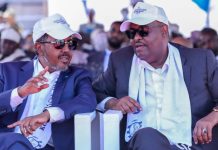
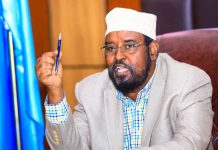
Puntland President Saeed Abdullahi Deni arrived in Kismayo on Wednesday and was received by Jubaland President Ahmed Mohamed Islam Madobe and senior regional officials. Former prime minister and presidential hopeful Hassan Ali Khaire, a leading figure in the opposition Somali Salvation Forum, also arrived in the city, where he was welcomed by Jubaland authorities.
Several opposition figures reached Kismayo earlier in the week, with others expected before the conference formally opens, likely on Wednesday or Thursday.
More Stories
Somalia opposition weighs forming parallel government amid election dispute
A gathering that could shape Somalia’s future: Inside the Kismayo conference
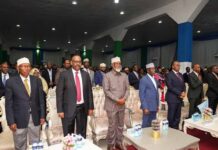
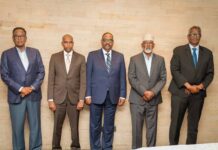
The meeting brings together leaders from Puntland and Jubaland, alongside opposition politicians united under a newly formed alliance known as the Somali Future Council. According to participants, the talks will focus on how to counter what they describe as the federal government’s unilateral plans either to organize elections without consensus or to extend the term of President Hassan Sheikh Mohamud.
President Hassan Sheikh, whose mandate is set to expire in about five months, sought to project confidence this week by publicly obtaining his voter registration card. He said Somalia has irreversibly embarked on the path toward a one-person, one-vote election, repeating his long-standing assertion that those who oppose the process “will not be heeded.”
Federal officials say the government intends to hold a three-tier election based on universal suffrage: beginning with local councils, followed by elections for federal member state leadership and the federal parliament, which would then elect the president.
But critics across the political spectrum question whether such an ambitious electoral plan can be implemented within the remaining months of the government’s term. They cite severe financial constraints, persistent insecurity, limited government control across large swaths of the country and the absence of an agreed electoral model, legal framework or timeline.
Opposition figures say the Kismayo conference is aimed at preparing coordinated responses to any unilateral move by Mogadishu, whether the government proceeds with limited one-person, one-vote elections in select areas or seeks a term extension for federal authorities.
Some participants warned that if the government presses ahead without consensus, opposition leaders and allied regional states could convene a second, broader conference in Kismayo. That meeting, they said, would include a wider array of political actors, regional administrations and civil society groups – and could culminate in the formation of a parallel federal government.
Somalia’s political future remains deeply uncertain. Whether elections can be organized, a compromise reached or a term extension imposed – potentially triggering unrest in Mogadishu – is unclear. Even some officials within the federal government privately acknowledge they do not know how the standoff will end.
As one senior political figure put it, only President Hassan Sheikh may know his next move: whether to push for an outright extension, or, under mounting pressure, seek a negotiated delay to organize an indirect vote.
Contact us: info@somaliguardian.com